
Deck Building in Bend, Oregon
New decks in cedar, pressure-treated lumber, or composite, built from the footings up.
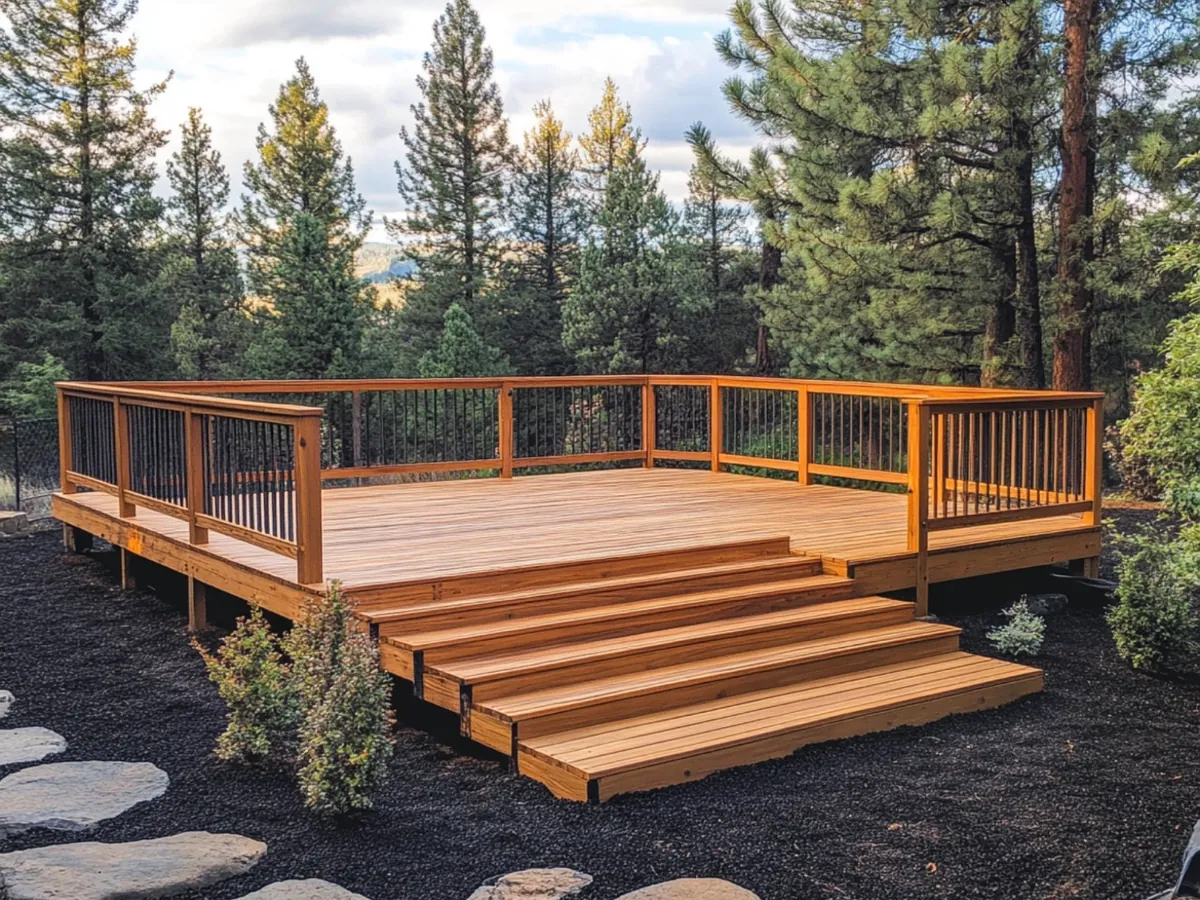
A deck in Central Oregon gets used hard. Summer evenings that cool off fast, mountain views worth sitting outside for, and then four or five months of snow sitting on the boards. A deck that's built well handles all of it without a complaint. One that isn't starts to bounce, sag, or pull away from the house within a few years, and fixing a bad frame later costs more than building it right the first time. We build decks across Bend and out to Redmond and Sisters, from simple ground-level decks off a back door to raised, multi-level decks on sloped lots with a view of the Cascades. Every one starts with the parts you'll never see: the footings, the posts, the beams, and the way the deck ties into your house.
Below we cover how to tell when it's time for a new deck, the materials that hold up here, how a build actually goes from first visit to final inspection, and what the permit side looks like in Bend. And once it's built, keeping the new boards stained is the simplest way to protect what you just paid for, so we'll talk about that before we leave too. A free quote takes one short visit.
Signs It's Time for a New Deck
Sometimes the answer is obvious. You've got a bare patch of yard and you want somewhere to put a grill, a table, and a few chairs. Other times it's an old deck that's past saving. Boards that feel soft or spongy underfoot, posts sitting directly on dirt, or a ledger board that's pulling away from the house all point to a frame that's failing, not just the surface. Railings that wobble when you lean on them are a safety problem, and stairs that rock are another. If more than a few joists are rotted, a rebuild usually costs less over time than chasing one repair after another. We'll walk the deck with you, check underneath with a flashlight, and tell you honestly which camp you're in. If it's a rebuild, we can often reuse good footings and save you part of the cost.
Cedar, Pressure-Treated, or Composite
Each material has a place. Pressure-treated lumber is the most affordable and makes a strong frame, but on the walking surface it checks and splits in the dry air unless it's stained regularly. Western red cedar looks great, resists rot naturally, and stays more stable as it ages, though it's softer and needs the same staining routine to keep its color. Composite boards cost more up front but don't need stain at all, and they won't splinter under bare feet. They do get hot in direct afternoon sun, which matters on a south-facing deck in July. A common middle road is a pressure-treated frame with cedar or composite decking on top. We'll lay out the tradeoffs plainly and quote each option side by side so you can compare. Hidden fasteners, board color, and railing style are all part of that same conversation.
How We Build a Deck
It starts with a visit. We measure the space, look at the slope and the soil, and talk through how you want to use the deck: dinners, a hot tub, or just a spot for morning coffee. You get a written quote and a simple drawing. Once you sign off, we pull the permit if one's needed and set a start date. On site, the first job is the footings, concrete set below the frost line so the deck doesn't heave when the ground freezes. Then come the posts, beams, and joists, with the ledger bolted and flashed against the house so water can't rot it from behind. Decking, stairs, and railings go on last. Most decks take one to three weeks depending on size and weather. We keep the site tidy each day and haul off every scrap when we finish.
Permits, Height, and Code
In Bend, a deck needs a building permit if it sits more than 30 inches above the ground or has stairs. Adding lighting or a gas line for a grill can bring separate electrical or plumbing permits too. Once a deck is over 30 inches, code also requires a guardrail at least 36 inches tall, with balusters spaced tight enough that a 4-inch ball can't pass through. Those rules exist for good reason, and an inspector will check them before signing off. We handle the permit paperwork and schedule the inspections, so you don't have to learn the process yourself. If you're in an HOA, we'll also make sure the design and colors fit their rules before we order a single board. That way there are no surprises at final inspection or from the neighbors.
Already have a deck that just needs some work? Our deck repair crew can usually fix it without a full rebuild.