
Deck Staining and Refinishing in Bend, Oregon
Clean, sand, and stain your deck before the sun and snow crack the boards.
Walk across most decks in Bend after a few summers and you'll see the same thing. The boards have gone gray, the grain has opened up, and in spots the wood is splitting along its length. That's the high desert at work. At this elevation the sun is strong and the air is dry, and bare wood loses its moisture fast. Then winter adds snowmelt that soaks into every crack and freezes overnight, prying each one a little wider. Left alone, a deck goes from faded to splintered to rotting faster here than it would in a wetter, cloudier place. We stain and refinish decks across Bend, and we see a lot of vacation-home decks in Sunriver and rural places out toward La Pine that have gone a few seasons too long.
Below we explain how to tell your deck is due, the difference between the main stain types, how we do the work step by step, and how often you'll need it again. The good news is that staining is far less expensive than replacing boards. If some of the boards are already too far gone, our deck repair work can replace them first so the whole deck gets a clean start. Quotes are free.
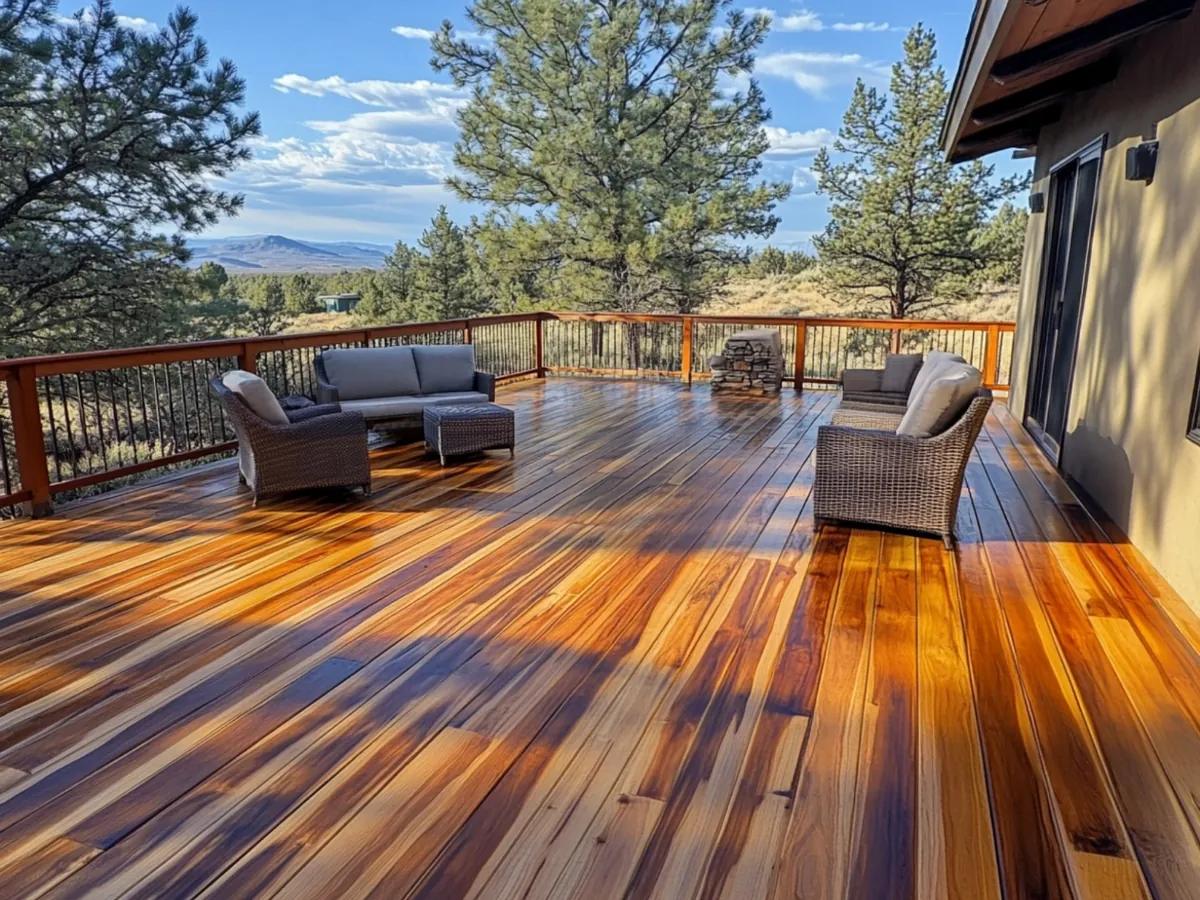
Signs Your Deck Needs Stain
The easiest check is the water test. Sprinkle some water on a sunny section of the deck. If it beads up, the finish is still working. If it soaks in and the wood turns dark, the protection is gone. Other signs are easy to spot once you know them: gray or silver boards, rough splinters coming up, black spots of mildew in shady corners, and old stain peeling in patches. Peeling is worth catching early. A worn-out solid stain has to be stripped before it can be redone, which is a bigger and pricier job than a simple recoat. If you're seeing any of this, the wood is exposed, and every summer that passes takes a little more life out of the boards. Railings and the top step usually show it first, since they get the most sun and hands.
Transparent, Semi-Transparent, and Solid Stain
Stains come in three basic types, and the difference is how much pigment they carry. A transparent or toner stain shows nearly all of the grain but has little pigment to block UV, so in Bend's sun it wears out fastest, often within a year. A semi-transparent stain tints the wood while still letting the grain show, and it soaks into the boards instead of forming a film on top. Under this much sun, plan on a fresh coat every one to two years. A solid stain covers like paint and lasts longer, around three to four years, but it hides the grain and eventually peels rather than fading. Most cedar and pressure-treated decks here do best with a penetrating semi-transparent, and we'll help you pick a color. We bring sample boards so you can see it on real wood before deciding.
How We Stain a Deck
First we clear the deck and cover the plants, siding, and anything else nearby. Then we wash the boards with a deck cleaner to lift out the gray, dirt, and mildew, followed by a brightener that brings the wood back to its natural color. If there's old failing stain, we strip it. The deck then has to dry fully, usually a day or two, because stain over damp wood won't soak in. We sand any rough or fuzzy spots, set popped nails or screws, and apply the stain by brush or pad, working it into the grain one board at a time. Railings and stairs get the same care as the main surface. Most decks are done in two to four days, weather allowing. We watch the forecast closely, since stain needs dry days and mild temperatures to cure.
How Often You'll Need It
How long a stain lasts depends on the product, the wood, and how much sun the deck gets. A south- or west-facing deck in full sun wears out faster than one shaded by a ponderosa or the house itself. Horizontal boards also wear faster than railings because snow sits on them and people walk on them all summer. In general, a semi-transparent stain lasts one to two years here and a solid stain three to four. New pressure-treated lumber is a special case. It's often too wet to take stain right away, so we usually recommend letting it dry out for a few months first. We'll tell you the right timing for your deck and can remind you when the next coat is due. Staying on schedule keeps each recoat quick and affordable.
A fence that matches the deck looks a lot better than one that doesn't, so ask about staining your fence while we're there.